
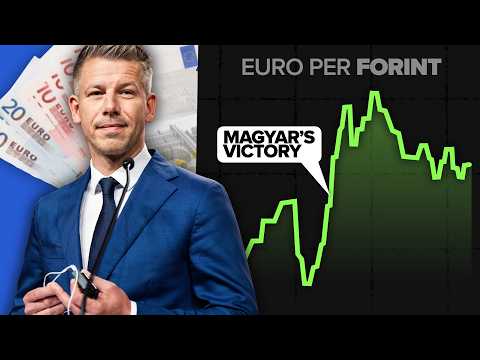
Economic recovery stories tend to arrive with a fanfare: the currency rises, bond yields ease, somebody announces reform and suddenly the country is apparently back from the fiscal graveyard. Hungary’s current recovery debate has all the ingredients for that sort of neat narrative—and all the reasons to be suspicious of one.
The reference video behind this discussion describes a dramatic political transition, a market rally and the release of large amounts of European Union funding. Those specific political events, dates and post-election figures should be treated as a scenario presented by the video, not independently established fact. That distinction matters. The underlying questions, however, are very real: can Hungary restore growth without reigniting inflation, repair its public finances without crushing demand, and make itself a more predictable place to invest?
There is no single dashboard light labelled “recovery”. Hungary’s trajectory has to be read through several instruments at once—and a few of them have been blinking red for rather longer than ministers or markets would prefer.
Inflation may cool, but households remember the bill
Inflation is the most emotionally charged measure in any economic debate because it turns up at the supermarket, the petrol station and the monthly energy bill with the subtlety of a bailiff. The video points to inflation reaching 17% in 2023 and says prices rose cumulatively by 57% between 2020 and early 2026, compared with 28% across the EU. Even when annual inflation slows, that does not reverse the rise in the overall price level. Cheaper inflation is not cheaper living.
This is why any claim of a turnaround needs to distinguish between disinflation—prices still rising, just more slowly—and a meaningful improvement in purchasing power. Wages need to outpace current inflation for a sustained period, while household confidence must recover enough to support consumption. A headline rate can look handsome in a finance ministry presentation; a family’s accumulated food, rent and utility costs are less easily persuaded.
The reference video credits a stronger forint with making imports cheaper and thereby easing inflation. That mechanism is sound in principle. Hungary imports energy and many consumer and industrial goods, so exchange-rate strength can take some heat out of prices. But it is not a permanent magic trick. A volatile currency can reverse the benefit quickly, particularly if global energy costs climb again.
Growth needs more than a rebound from a weak base
Hungary’s economy is deeply connected to European manufacturing supply chains, especially those serving the automotive sector. That integration can be a formidable advantage when continental demand is healthy. It can also leave the country exposed when industrial orders weaken. The video describes a sharp industrial decline and near-stagnant output in the years after the pandemic, a reminder that factories cannot be willed into producing more by optimistic press conferences.
A credible recovery would show up across several areas:
- rising industrial output and export orders rather than a one-quarter statistical bounce;
- real-wage growth that translates into durable household spending;
- private investment beyond politically favoured sectors or state-backed projects;
- higher productivity, not merely higher public spending;
- more resilient agricultural output, particularly after weather-related disruptions.
The video mentions an IMF expectation of roughly 2% growth in a given year, following 0.4% the year before. Forecasts are useful, but they are not verdicts. They are conditional estimates, prone to revision when energy markets, German industrial demand or domestic policy take an unexpected detour. Investors should watch whether forecasts are being met, not merely whether they sound reassuring at a podium.
The budget is where optimism meets arithmetic
Hungary’s public finances are at the centre of the argument. The video describes a period of heavy domestic development spending, price caps and support measures, alongside large deficits. It also refers to competing deficit estimates—precisely the kind of disagreement that should make readers reach for official fiscal data, independent budget watchdogs and European Commission assessments rather than choose their preferred political narrator.
For EU fiscal rules, the familiar benchmark is a general government deficit below 3% of GDP. Euro adoption also requires a country to meet a wider set of Maastricht criteria, including conditions on inflation, public debt, long-term interest rates and exchange-rate stability. Reaching one target for one year is not the same thing as building a sustainable path to all of them.
That leaves policymakers with awkward choices. Spending cuts can improve the deficit but weigh on activity. New taxes can raise revenue but may discourage investment. Ending poorly priced procurement contracts or curbing politically directed spending could improve both public finances and market confidence, if carried out transparently. The phrase to watch is not “austerity” or “stimulus”; it is credible medium-term adjustment. Boring, perhaps. Bond markets adore boring.
EU funds are not a cash machine with no conditions
The prospect of unlocked EU funding is one reason recovery narratives can gain momentum so rapidly. The video says more than €16 billion had been blocked and presents access to those funds as a potential boost worth about 7% of GDP. Whether any sum is available, released or spent must be verified against European Commission decisions and payment records. Announcements, approvals and money arriving in the economy are three different stages, often separated by a long administrative corridor.
Still, the broad economic logic is clear. EU money can finance infrastructure, energy resilience, skills, digitalisation and regional development while reducing pressure on the national budget. It can also attract complementary private capital. Yet funds do their best work when procurement is competitive, institutions are trusted and projects are selected for economic value rather than their usefulness in a party newsletter.
Rule-of-law concerns are therefore not merely a Brussels-versus-Budapest political drama. They affect the cost of capital, the reliability of contracts and the willingness of international companies to invest for ten years rather than one. For business, an impartial court and predictable regulation can be more valuable than a glossy investment brochure and a ceremonial shovel.
What a Hungarian recovery would mean beyond its borders
For investors, a stronger forint, falling yields and a clearer euro-adoption strategy could signal lower perceived risk. But each needs testing against fiscal results, central-bank credibility and actual institutional reform. A rally driven by expectation can be swift; confidence built through consistent policy is slower, less photogenic and considerably more useful.
For companies operating in Central Europe, Hungary’s direction matters because it sits inside tightly linked trade, transport and manufacturing networks. A stable Hungarian business environment could support suppliers and logistics firms across neighbouring EU economies. Conversely, renewed inflation, erratic intervention or fiscal slippage would not remain politely within national borders.
The recovery debate is ultimately less about declaring victory than proving a change in economic habits. Watch the inflation path, real wages, industrial orders, deficit outturns, the status of EU payments and the quality of institutions. If they improve together, the story has substance. If only the headlines improve, Hungary may simply be enjoying the economic equivalent of a flattering camera angle.