
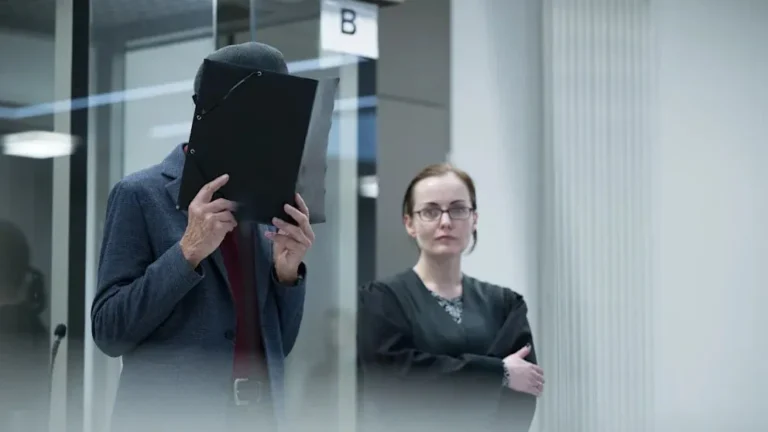
In a courtroom saga that feels more like a Cold War thriller than a case from a dusty archive, an 80-year-old former East German Stasi officer, Martin Naumann, has been convicted of murder for a crime committed half a century ago. The ghost of the German Democratic Republic (GDR) came back to haunt Naumann when he was sentenced to 10 years in prison for the 1974 killing of Polish firefighter Czesław Kukuczka. After half a century, justice finally caught up with him, proving that time might heal wounds, but it doesn’t erase them.
A Crime Buried in the Past (And in Stasi Archives)
Picture this: Berlin, 1974. The Cold War is in full swing, and the infamous Stasi, East Germany’s secret police, are the eyes and ears of a paranoid regime. Kukuczka, a Polish national, found himself on the wrong side of history—literally. As he attempted to escape to West Berlin, he was gunned down on Friedrichstrasse, a border crossing infamous for its deadly confrontations. His crime? Threatening to blow up the Polish embassy with a bomb, though it turned out to be a bluff. Naumann, a first lieutenant in an elite Stasi unit, was tasked with “neutralizing” the threat. And neutralize he did, with a cold precision that would make any spy novelist blush.
Kukuczka’s family was never told the truth. His wife received an urn with his ashes, no questions allowed, no explanations given. Classic Stasi move—disappear the man, then erase his story.
The Hunt for Justice: A Historian’s Obsession
The plot to bring Naumann to justice began decades after the GDR dissolved into history. Historian Stefan Appelius, the Sherlock Holmes of Stasi crimes, stumbled upon documents in the Stasi archives that had somehow survived the regime’s frantic shredding spree before the Berlin Wall fell. Using a “digital puzzler machine”—because of course, the Stasi didn’t shred their incriminating files gently—Appelius pieced together enough evidence to reopen a case that had been buried deeper than a Soviet bunker.
Appelius contacted Kukuczka’s family in Poland, sparking the long-overdue pursuit of Naumann. An arrest warrant was issued in 2021, and after over six months of courtroom drama, Naumann’s goose was finally cooked.
Naumann’s Plea: “I Was Just Following Orders”
Naumann, unsurprisingly, pleaded not guilty. In his defense, he claimed that Kukuczka posed a threat and that he was simply following orders—a classic excuse that has rung hollow since the Nuremberg Trials. But the court wasn’t buying it. Prosecutors argued that Naumann shot Kukuczka with a level of “malice” that set the case apart from the usual GDR-era tragedies. Kukuczka, believing he was about to be granted his freedom, was led to his death in a setup more twisted than any Cold War espionage novel. Prosecutor Henrike Hillman, not mincing words, explained that this kind of deception fulfilled the legal criteria for murder, not manslaughter—a rare but important distinction in cases involving former Stasi officers.
Eyewitnesses From a Field Trip… And the Twilight Zone?
In a plot twist worthy of a dark comedy, three pensioners—who had been teenagers on a school trip to East Berlin from West Germany—came forward to testify. They had witnessed the shooting, though at the time, they were probably more focused on the eerie vibe of a school excursion into communist territory than on testifying at a murder trial 50 years later. Their testimony, combined with the freshly unearthed documents, sealed Naumann’s fate. It was one of those courtroom moments where you could almost hear the collective sigh of justice served, albeit a little late.
Stasi’s Bloody Legacy: A Drop in the Ocean?
The trial represents a significant moment in holding former East German officials accountable for their actions. While this might feel like a victory for history buffs, it also highlights the bitter truth: Naumann’s conviction is a drop in the ocean of unpunished crimes. At least 140 people were killed trying to escape across the Berlin Wall between 1961 and 1989. And let’s not sugarcoat it—those responsible often skated free, hiding behind the convenient excuse of “just following orders.”
Most former Stasi officers have faced manslaughter charges at best, often receiving lenient sentences. Naumann’s conviction for murder, not manslaughter, breaks that mold. It’s a stark reminder that even in a world that often forgets, the truth has a way of rising from the ashes, just like those shredded Stasi documents.
The Long Arm of Justice
Naumann’s sentencing might not bring Kukuczka back, but it does send a message: no matter how long it takes, or how deeply buried the evidence, you can’t outrun the past forever. The Cold War might be over, but its ghosts still linger, demanding justice—even if it takes half a century to arrive.
As for Naumann? He’s 80 years old now, and prison will likely be where he spends his final days. Maybe he thought he’d gotten away with murder. But as the saying goes, history has a funny way of catching up with you—especially when your crimes are written in Stasi ink.