
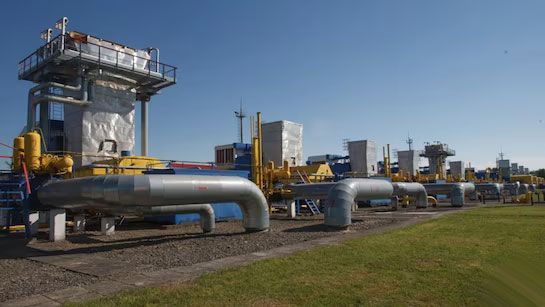
As the clock struck midnight on December 31st, 2024, Ukraine did more than bid farewell to another grueling year of war—it also bid farewell to Russian gas transiting its territory. After nearly three years of conflict, Kyiv has decided to shut the valve on Russian gas pipelines to Europe, ending a lucrative transit deal worth €768 million annually. But it’s not just Ukraine counting its losses; Russia stands to lose an estimated eight times that amount, making this a high-stakes game of geopolitical poker.
Meanwhile, as Kyiv prepared for New Year’s celebrations, the capital was rocked by air raid sirens. In a grim reminder that war doesn’t take holidays, Russian forces launched a fresh missile barrage. Thanks to Ukraine’s increasingly sophisticated defense systems, the attack caused only minor damage—a single building in Kyiv bore the brunt of the strike. Still, it was enough to shake the festive spirit of the city’s residents, many of whom spent their evening sheltering underground.
A New Front in an Old Conflict
Over in Crimea, the drama played out in the skies as a Ukrainian drone took down a Russian helicopter over the Black Sea. For Russia, this was not the kind of fireworks they’d hoped for to ring in the New Year. In response, Moscow published footage claiming its forces had seized yet another small settlement in the Donbas, where the front line continues to shift with all the speed of a glacier.
The so-called «lightning operation» Russia launched in early 2022 has devolved into a brutal war of attrition. Both sides are locked in a grim stalemate, and for the third consecutive Christmas, soldiers huddle in freezing trenches instead of around family dinner tables. «At this point,» joked one Ukrainian soldier, «I’m starting to think Santa’s holding out on delivering peace.»
Cold Winters, Colder Realities
The gas cutoff is Ukraine’s boldest economic move yet in its struggle against Russia. While the decision will cost Ukraine nearly €800 million annually, Kyiv seems willing to shoulder the financial hit to further undermine Russia’s economy. For Moscow, the blow is far more severe. The loss of Ukrainian transit routes means Russia’s gas exports to Austria, Hungary, Slovakia, and Moldova will face significant disruptions.
For these countries, the timing couldn’t be worse. With winter temperatures plunging, leaders are scrambling to find alternative energy sources to replace the Russian gas that has kept their citizens warm. Moldovans, in particular, are bracing for a long, cold season. «We used to worry about heating bills,» quipped one Chisinau resident. «Now we’re just worried about heating, period.»
The European Union, which has been working to wean itself off Russian energy since the start of the war, may step in with emergency measures. But as energy prices soar, many are left wondering whether this geopolitical chess match has a winning endgame.
The New Year’s Gamble
Critics have labeled Kyiv’s decision as a high-risk gamble. With its economy already battered by war, losing €768 million annually won’t be easy to absorb. Yet Ukrainian officials remain defiant. «We’re not just fighting a war on the battlefield,» said an advisor to President Volodymyr Zelensky. «We’re fighting an economic war, too. Cutting off Russian gas is another way to drain their war chest.»
In Moscow, the mood is equally defiant. The Kremlin brushed off the gas transit shutdown as a «minor inconvenience» and promised to reroute supplies through other pipelines. But analysts are skeptical, noting that building new infrastructure or rerouting existing flows will take years—time Russia may not have as its economy continues to wither under international sanctions.
A War Without an End in Sight
As Ukraine marks three years of war this February, the conflict shows no signs of abating. Both sides remain locked in a deadly stalemate, with each passing day leaving more destruction, more loss, and more unanswered questions about the future.
For now, Ukrainians will face the New Year with a mix of hope, resilience, and dark humor—a survival mechanism as essential as any weapon. As one Kyiv resident put it, «At least we’ve learned to keep calm under fire. It’s the heating bill that scares me more these days.»