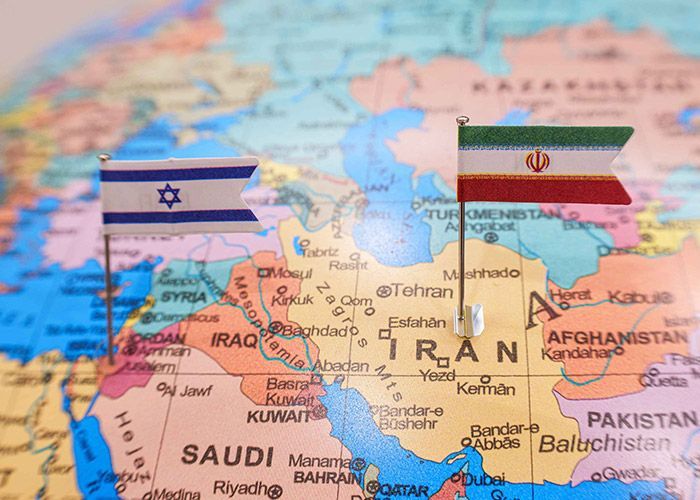

This Tuesday, Iran responded to Israel’s attacks in Lebanon, aimed at destroying the terrorist group Hezbollah, by launching around 180 ballistic missiles, some of them hypersonic. Israel managed to block most of them with its air defense systems, but Iran’s operation has raised concerns about the possibility of a large-scale conflict between the two nations. While predicting the victor is difficult, it is possible to assess who has the advantage in terms of manpower and military assets if both armies were to engage.
Military personnel
According to GlobalFirePower (GFP), Iran ranks higher than Israel in military power, holding the 14th position compared to Israel’s 17th. The populations of the two countries play a role in this, with Iran having 88.5 million inhabitants compared to Israel’s 9.4 million.
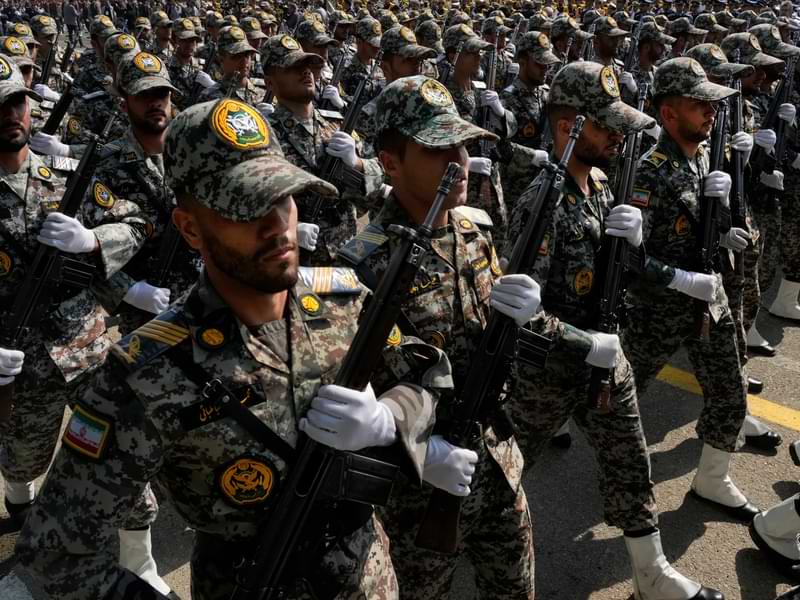
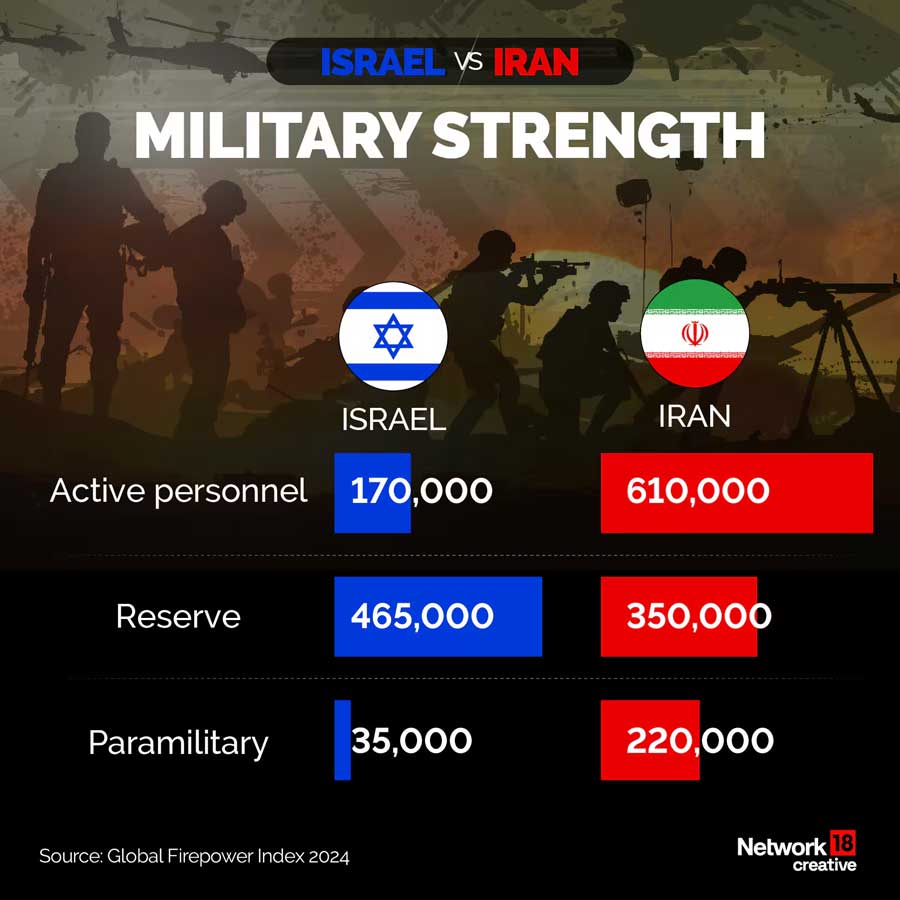
Iran’s Armed Forces are among the largest in the Middle East, with 610,000 active-duty personnel and about 350,000 trained reservists, divided between the Iranian Army and the Islamic Revolutionary Guard Corps (IRGC). In contrast, Israel’s Defense Forces (IDF) have 169,500 active personnel and 465,000 reservists, 115,000 more than Iran.
Defense Spending
Israel ranks 24th in defense spending, while Iran is 33rd. Israel’s budget exceeds $24 billion, while Iran’s is just under $10 billion.
Iran is constrained by international sanctions but has alternative sources of funding. The Foundation for Defense of Democracies (FDD) reports that the military controls around 20% of the value of companies listed on the Tehran Stock Exchange and owns thousands of other companies, generating revenue for the armed forces. Additionally, the IRGC controls a significant portion of Iran’s underground economy.
Nuclear Weapons and Missiles
Israel has possessed nuclear weapons since the 1960s, though it has never been transparent about the details. The Nuclear Threat Initiative (NTI) estimates Israel has 90 nuclear warheads and enough material to produce up to 300. Iran does not currently have nuclear weapons but has been developing the means to produce them.
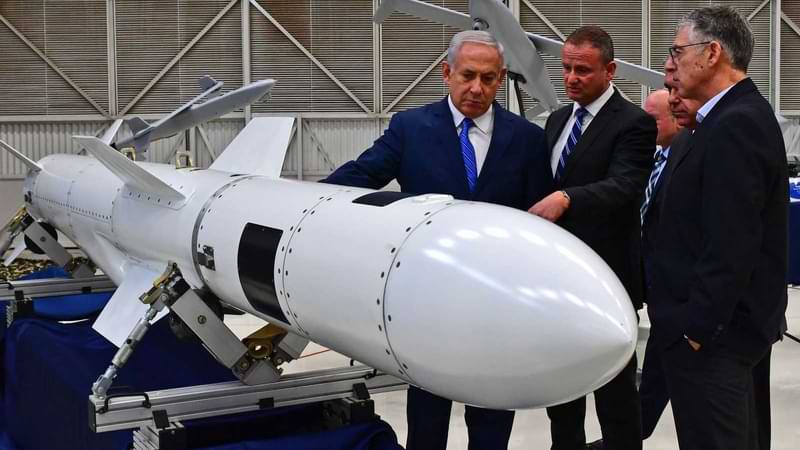
However, Iran boasts an impressive missile arsenal. According to the International Institute for Strategic Studies (IISS), Iran has one of the largest stockpiles of ballistic missiles and drones in West Asia. This includes cruise missiles, anti-ship missiles, and hypersonic ballistic missiles with a range of up to 2,000 kilometers, capable of reaching any point in Israel. Iran is said to have the most advanced short- and medium-range missile system in the region, though Israel’s Iron Dome, David’s Sling, and Arrow defense systems have consistently proven effective in countering these threats.
Land, Air, and Naval Power
When it comes to land and air power, Iran often has the numbers advantage, while Israel excels in technology. For example, Iran has more tanks than Israel, with a fleet of 1,996 compared to Israel’s 1,370, a difference of 626. However, most of Iran’s tanks are outdated models that cannot match Israel’s advanced Merkava tanks, the IDF’s preferred battle tank.
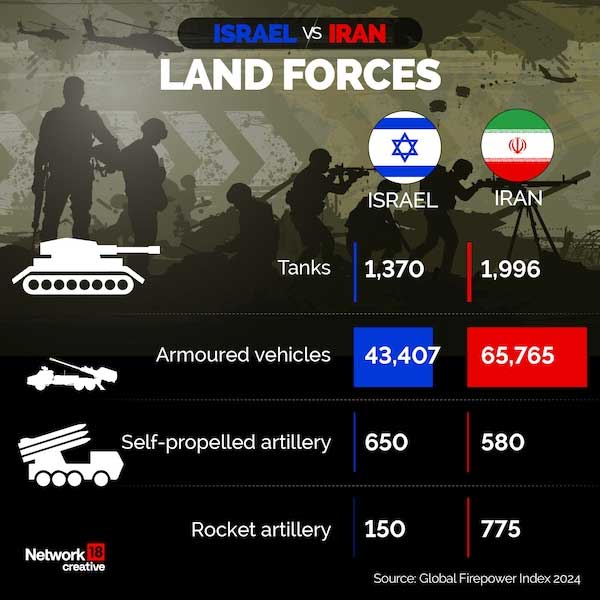
Similarly, Iran surpasses Israel with 65,765 armored vehicles compared to Israel’s 43,407. The same is true for towed artillery, where Iran has 2,050 units compared to Israel’s 300. However, in self-propelled artillery, Israel holds a slight edge with 650 units compared to Iran’s 580. For multiple-launch rocket systems (MLRS), Iran again holds the numerical advantage with 775 compared to Israel’s 300.
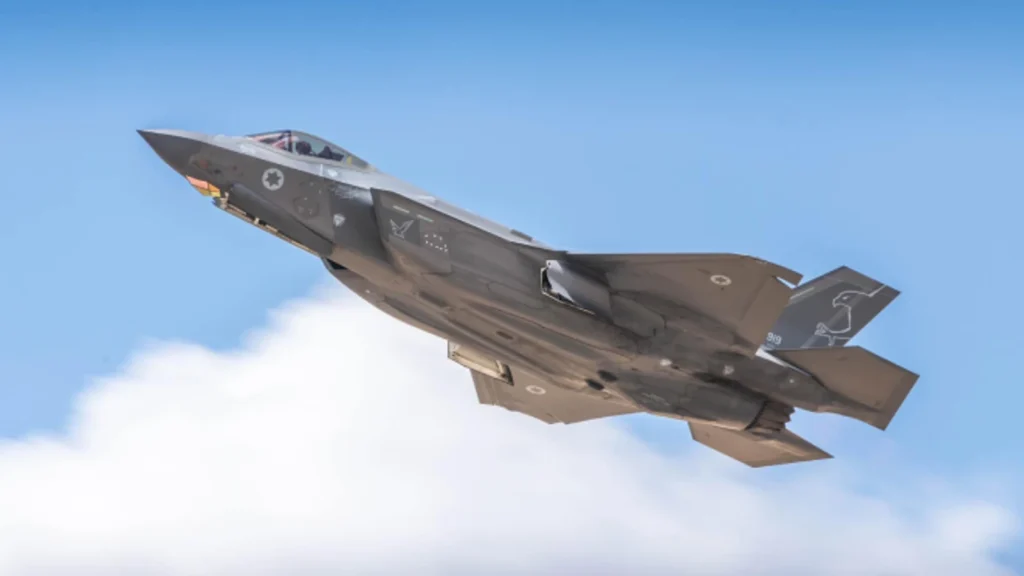
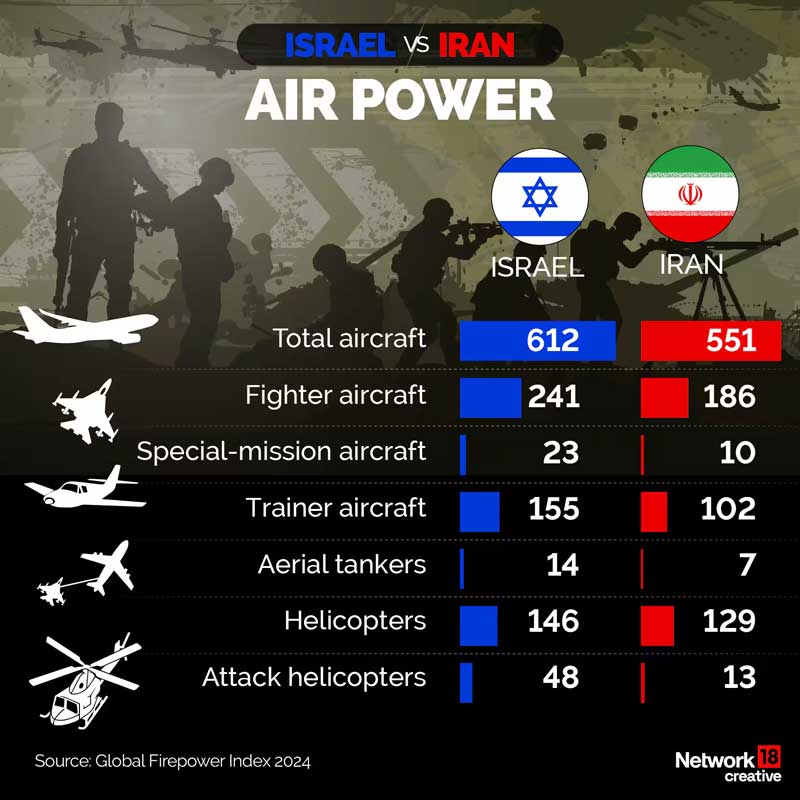
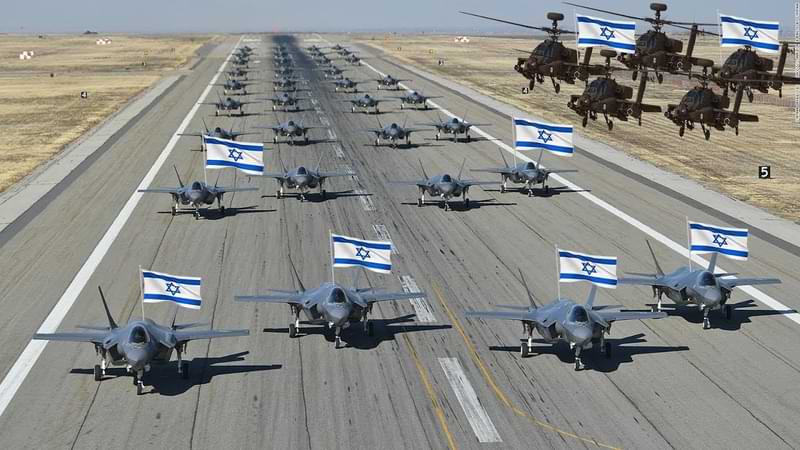
In the air, the situation is different. Iran’s 551 aircraft fall short of Israel’s 612, and as with tanks, Israel’s aircraft are far more advanced, including fighters like the F-15, F-16, and F-35. Israel has 241 combat aircraft compared to Iran’s 186.
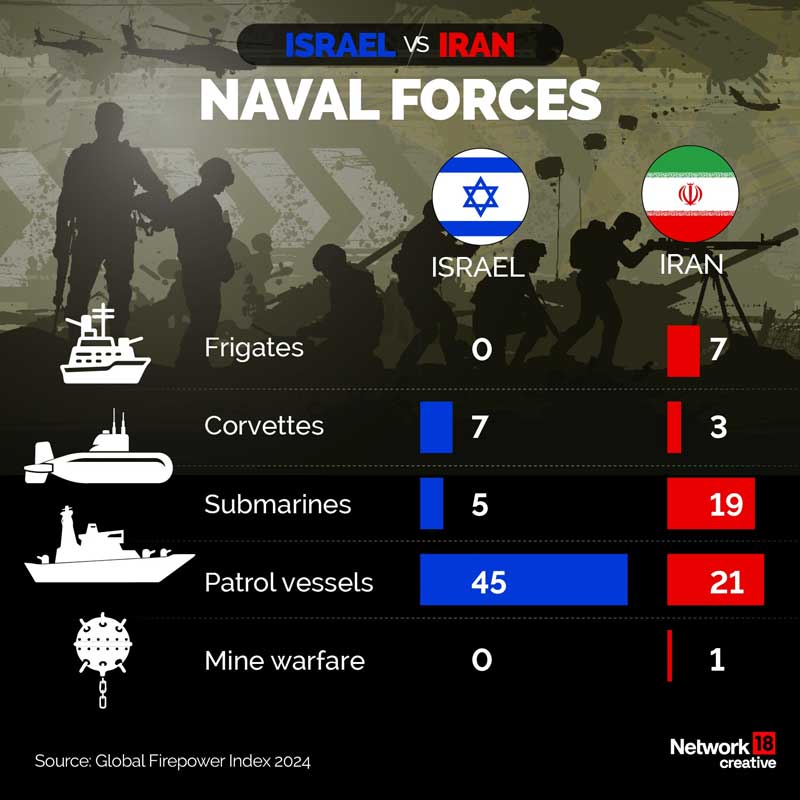
Regarding naval power, neither country has a significant maritime presence. Iran’s fleet comprises 101 vessels compared to Israel’s 67, and Iran has 19 submarines compared to Israel’s five. However, given the geographical context, it is unlikely that a conflict between the two countries would play out at sea.
Geography as a Determining Factor
Finally, geography plays a crucial role. Iran is significantly larger than Israel, with a land area of 1,648,195 square kilometers compared to Israel’s 22,145 square kilometers. The two capitals are separated by 1,149 kilometers, with Iraq and other countries in between. As a result, missiles and air forces would likely be the primary combat tools, favoring both Iran and Israel depending on the scenario.