
Israel’s got its defenses up, and they’re saying it’s all systems go: fully operational and taking down anything incoming from Iran.
Iran just lobbed almost 200 missiles toward Israel, following days of simmering tensions. Reports suggest that not all missiles hit their mark, with witnesses spotting plenty of them flying overhead instead of detonating on the ground. According to the Israeli military, their air defense is locked, loaded, and swatting threats out of the sky wherever needed—yes, even as you’re reading this.
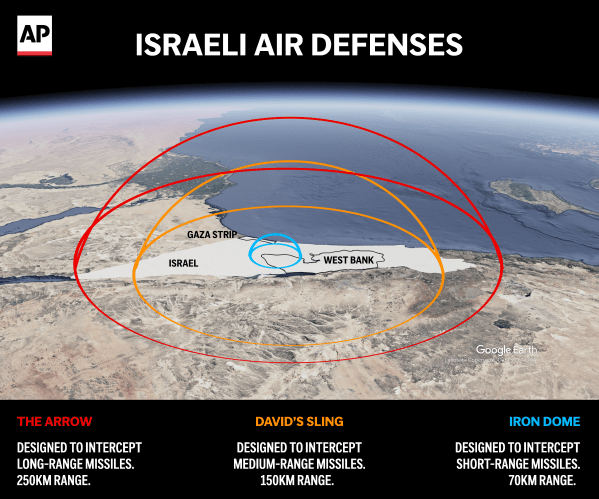
What’s Israel’s best defense, you ask? The Iron Dome.
It’s been intercepting missiles for over a decade, ever since Israel slapped it together with a little help from the U.S. You can think of it as the ultimate bouncer for the skies, rejecting anything suspicious—especially short-range rockets and mortar shells that Palestinian militants regularly fire from Gaza. Oh, and don’t forget drones—those little airborne troublemakers can’t sneak past the Iron Dome either.
This system’s been doing its job with impressive efficiency, especially back in October when Hamas surprised everyone with a barrage of rockets and militants, killing over 1,100 people and kidnapping 250. Despite the mayhem, the Iron Dome kept out around 90% of the missiles, according to the Israeli Defense Ministry. It’s like a huge invisible umbrella of doom, detecting any unwanted flying guests within a 100-kilometer range and sending them packing with a missile of its own.
But hey, no system is foolproof, especially when there’s a storm of rockets.
The Iron Dome is badass, but it has limits, especially when Iran’s hurling hundreds of projectiles at once. The so-called “swarm attack” tactic—sending drones and missiles in large numbers—can overwhelm it. In April, Iran sent over 300 drones and missiles toward Israel. While the U.S. and its Middle Eastern allies helped keep most of the damage at bay, a few sneaky missiles slipped through, causing some chaos at an Israeli military base.
The David’s Sling to the rescue!
When the little rockets aren’t enough to worry about, Israel’s got the «David’s Sling» on standby—yes, they’ve gone biblical with the names. It’s designed for medium-range missiles and was also built with a bit of Yankee help. But even David’s Sling would have a hard time playing catch with hundreds of projectiles raining down at once.
The big hitters: Arrow 2 and 3
For the real long-range stuff, Israel counts on Arrow 2 and Arrow 3, systems that can shoot down ballistic missiles from far, far away—like 2,000 kilometers away, a range that conveniently covers Iran. Arrow 2 does the job in Earth’s atmosphere, while Arrow 3? It takes the high road, knocking out missiles in outer space before they even get close.
Basically, Israel’s defense systems cover everything from rocket-fueled fireworks shows to intercontinental missile parties, with a bit of slingshot action thrown in for fun. But when missiles come in like a flood, even the best defenses might spring a few leaks. That’s why Israel isn’t playing solo; it’s got the U.S. and regional neighbors helping with missile smackdowns when things get really dicey.
In the end, it’s not all about one shield; it’s layers of them, each one hoping to make sure any incoming fire hits anything but Israeli soil.