
In the latest development in the volatile saga of Gaza, Israel has claimed another high-profile scalp, announcing with almost palpable satisfaction that they’ve taken out Mahmud al Mabhouh, the head honcho of Hamas’ drone unit. Yes, the man allegedly responsible for sending flying death machines over Israeli skies has himself been grounded—permanently. Al Mabhouh was reportedly killed in an airstrike in northern Gaza, and if Israel’s military is to be believed, this is one less “terrorist innovator” launching drones from the comfort of his secret lair.
Drones: Modern Warfare’s Scariest Buzzkill
Al Mabhouh, not to be confused with your everyday drone hobbyist filming beaches or real estate, was apparently the brains behind Hamas’ increasingly sophisticated UAV (unmanned aerial vehicle) strategy. Israel’s Defense Forces (IDF) accuse him of orchestrating attacks against Israeli troops and territory. The IDF has been on a relentless mission to eliminate threats, and al Mabhouh’s sudden career change from “Drone Commander” to “Drone Debris” is the latest chapter in this ongoing tragedy.
It’s a brutal reminder that in the tangled mess of the Israeli-Palestinian conflict, no one is safe—not even in the skies. While Hamas’ drones are less flashy than, say, a fighter jet, they’ve been a significant thorn in Israel’s side, leading to a tit-for-tat war of aerial supremacy that plays out like a dystopian sci-fi movie. In this case, it looks like Israel’s air defense systems decided to skip the plot twists and just roll the credits on al Mabhouh.
Grounded by Missiles, Not Gravity
This isn’t just a routine killing; it’s part of Israel’s renewed military campaign in Gaza, which has been ramping up in the past two weeks. Al Mabhouh’s termination—likely while he was somewhere carefully reviewing drone schematics or plotting his next aerial mischief—was just one move in a broader chess game of death. Israel, always eager to showcase its military prowess, has been tightening the noose around key Hamas operatives as it presses deeper into northern Gaza.
The real heat, however, is not just about high-tech warfare; it’s about who controls the air—and by extension, who controls the narrative. Taking out a figure like al Mabhouh is more than a tactical victory; it’s a message, delivered with military precision, that Israel won’t tolerate having its skies invaded by anything that isn’t its own.
Yabalia: The Deadliest Block Party You’ve Never Heard Of
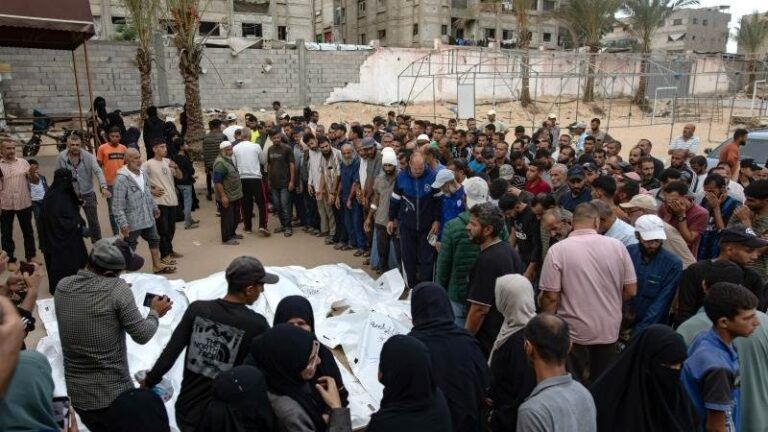
But while Israel celebrates al Mabhouh’s timely departure, things on the ground are far from celebratory. In the camp of Yabalia, where civilians are trapped in what is now a twelve-day siege, the death toll continues to climb. Over 350 people have been killed in the latest round of bombardments, and hospitals are overflowing with patients. The numbers coming out of Yabalia read more like a casualty report from the apocalypse: hospitals are collapsing under the weight of the wounded, the sick, and the dying.
The Kamal Adwan hospital, particularly its pediatric and maternity wards, has been reduced to something out of a horror movie. Neonatal ICU beds are overflowing with the smallest, most fragile victims of this conflict, and the staff can do little more than watch helplessly as critical supplies dwindle to zero. Gaza’s health authorities are practically begging for a humanitarian corridor, but the only thing flowing in right now are missiles and, apparently, a growing body count.
Humanitarian Help or PR Stunt?
Speaking of which, according to Israel’s PR machine on social media (formerly known as Twitter, but now tragically rebranded as “X”), they’ve been generously sending aid into Gaza. They’ve shared videos of trucks rolling in with 9,000 tons of supplies, including water, gas, and medical materials. Yet, if you ask the United Nations or anyone actually in Gaza, they’ll tell you a different story: a city under siege, with no access to basic necessities like food or medicine since October 1st. So, either someone’s cooking the books, or those trucks are getting held up in the world’s worst traffic jam.
It’s worth noting that while the IDF is quick to boast about sending aid, they’re even quicker to brag about the body count. In the past day alone, Israeli forces have claimed to have eliminated 50 “terrorists” in Yabalia, in a mix of close-quarter combat and airstrikes. At this point, Yabalia looks less like a refugee camp and more like a graveyard, as the living fight over whatever scraps of survival remain.
War of Attrition, With Hospitals as Casualties
If there’s anything darkly ironic about this whole situation, it’s the fact that the largest hospitals in the area—Kamal Adwan, Al Awda, and Al Saeed—are crumbling under the weight of the conflict while Hamas and Israel play a deadly game of whack-a-mole. Gaza’s health ministry is pleading for a humanitarian corridor to alleviate the human disaster, but as we all know, in war, pleas for mercy tend to fall on deaf ears, especially when those ears are attached to drones with Hellfire missiles.
The Conclusion: Another Day, Another Death
In the grand scheme of things, al Mabhouh’s death might seem like just another tactical victory for Israel. But when you zoom out, it’s just another bloody chapter in a war that refuses to end. Hamas may have lost its drone commander, but Israel’s drone strikes aren’t likely to slow down. And for the civilians trapped in Gaza, it’s hard to see much of a difference. After all, whether it’s a drone or a bomb, the end result is the same—devastation, despair, and death.
In the meantime, al Mabhouh, like so many others before him, has joined the ever-growing list of names on Gaza’s roll call of the dead.