
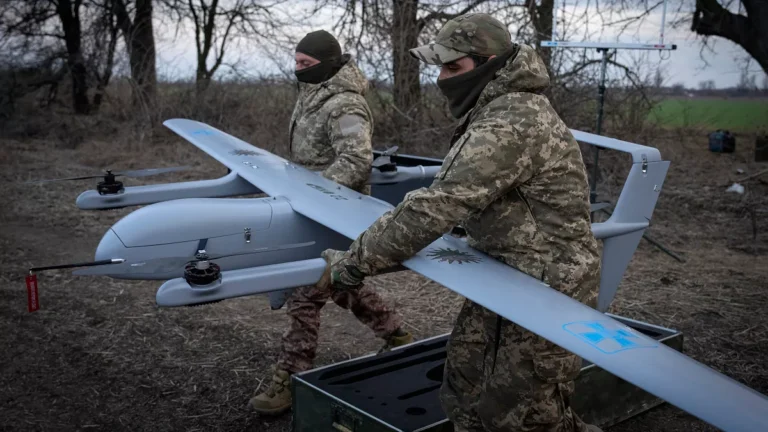
In what could be the most explosive twist in the ongoing war between Ukraine and Russia, Ukrainian forces have been lighting up Russian ammo depots like it’s the Fourth of July. Since mid-September, a series of targeted drone strikes have hit key Russian supply sites, and if you’re wondering whether these attacks are enough to make Moscow sweat, the answer might just be yes. These operations have already struck several key military installations, forcing Russia to rethink its logistics—because, let’s face it, a war is hard to fight when your stockpiles are constantly going up in smoke.
Precision Bombing: The New Strategy for Ukraine
We all know drones aren’t just for scenic Instagram shots anymore. In Ukraine’s case, they’ve become flying symbols of rebellion, raining destruction on Russian supply chains and logistical hubs deep inside Russian territory. Take the recent strikes on a Shahed drone storage facility in Krasnodar and an ammo depot in Adygea. Russian officials probably thought their stuff was safe, tucked away inside the motherland, but Ukrainian forces had other ideas. According to the Ukrainian military, around 400 Shahed drones were destroyed in the Krasnodar raid alone. That’s a lot of hardware that won’t be buzzing over Ukrainian cities anytime soon.
But is this enough to cripple Russia’s war machine? Well, no single strike is likely to make Vladimir Putin throw in the towel, but that’s not the point. The real aim seems to be death by a thousand cuts—disrupting Russian logistics enough to force Moscow into costly and time-consuming changes. According to the Institute for the Study of War (ISW), repeated hits on key supply hubs could eventually force Russia to scatter its operations, making it harder to keep up the relentless pace of artillery shelling and airstrikes that have defined their strategy so far.
A Timeline of Destruction
The fireworks began on September 18, when Ukrainian forces reportedly bombed an ammo depot in Tver. They followed up with strikes on the Oktiabrski depot and another facility in Tikhoretsk, all in a span of days. Then, in a crescendo of military might, Ukraine hit a missile and ammunition storage site in Bryansk and a military airfield in Adygea. It was like watching a drone hit parade—if your taste runs to fiery explosions and shattered military ambitions.
And these aren’t just little outposts on the fringes of the battlefield. The Khanskaya airbase in Adygea, for example, is home to Su-34 fighter-bombers and Su-27 jets—Russia’s flying warhorses that regularly terrorize Ukrainian towns. According to Ukrainian sources, the airbase was also used to refuel Russian planes that have been conducting bombings on the frontlines. By hitting these strategic points, Ukraine isn’t just disrupting supplies; it’s slicing into the Russian air force’s ability to keep up their deadly assaults.
Russia’s Response? Deny, Downplay, and Pray
Of course, Russian officials have been quick to downplay the damage. Almost every time a drone strike hits, Moscow’s mouthpieces claim that most of the Ukrainian drones were “intercepted” or “neutralized.” Sure, some may have been, but the giant, flaming craters left behind by the drones that weren’t shot down tell a different story.
One of the most spectacular hits happened at a fuel depot in Crimea, Russia’s illegally annexed playground. A drone strike turned the place into a massive inferno that raged for days, forcing the evacuation of over 1,000 people. Local puppet leader Igor Tkachenko tried to spin it as a mere “incident,” as though a fire that consumes 2,500 square meters of valuable fuel is something that just happens on a lazy Monday afternoon. It’s like calling the Titanic a “minor boating mishap.”
This wasn’t the first time Crimea has been in Ukraine’s crosshairs, either. Back in March, the Feodosiaya fuel terminal was hit, damaging pipelines and triggering another blaze. For Russia, losing these terminals is a serious headache, as they supply the Black Sea Fleet and key military operations in southern Ukraine.
Changing the Game with Western Firepower?
The big question now is, can Ukraine keep up this drone-powered offensive, and could it turn the tide of the war? Analysts say it’s possible—but Ukraine needs more than drones. If Kyiv gets access to long-range Western weapons systems and the green light to use them on Russian soil, things could get a lot more uncomfortable for Moscow. The ISW suggests that such a shift in Ukraine’s capabilities could allow them to cripple Russia’s logistical backbone before the Kremlin can effectively counter the strikes.
It’s a high-stakes gamble. Russia’s military still heavily outnumbers Ukraine’s in terms of both manpower and resources. But if Ukraine continues its relentless drone assault, the Kremlin will be forced to rethink its entire strategy. Russia may have to start spreading out its supply depots and military facilities, which would slow down its operations and make it harder to sustain their massive artillery and air bombardments.
In the end, Ukraine’s drone strikes might not win the war on their own, but they are already changing the rules of engagement. As Russia scrambles to adapt, we could be witnessing the slow, painful unraveling of Moscow’s once-unshakable war machine. And if Ukraine keeps playing its cards right, the drones will keep flying, and the fireworks will keep coming.